
Three Approaches to Designing a Bespoke HiFi Cabinet

Although the phrase “HiFi” cabinet suggests a fairly fixed type of furniture, in practice no two systems (or people) are the same. Some people want their equipment fully on display; others want it hidden away entirely. Some priories easily accessible vinyl collections while others are more focused on sound quality or appearance.
I was recently commissioned to make a record player cabinet that was quite different from the HiFi cabinets that I have made before. Ths prompted me to reflect on how varied these projects can become. This article looks at three bespoke HiFi cabinets I have made recently, and explores the different priorities that shaped these and how these priorities affected the final designs.
A Record Player Stand Designed Around Vinyl Storage and Valve Amplifiers
This piece combines substantial vinyl storage and record player stand. It was commissioned to house a high-quality sounds system from the 70s. The intention from the outset was to showcase the equipment rather than conceal it. The turntable and valve amps sit proudly on top of a beautiful piece of utile with a hand-applied waxed finish that gives a gorgeous depth and warmth.
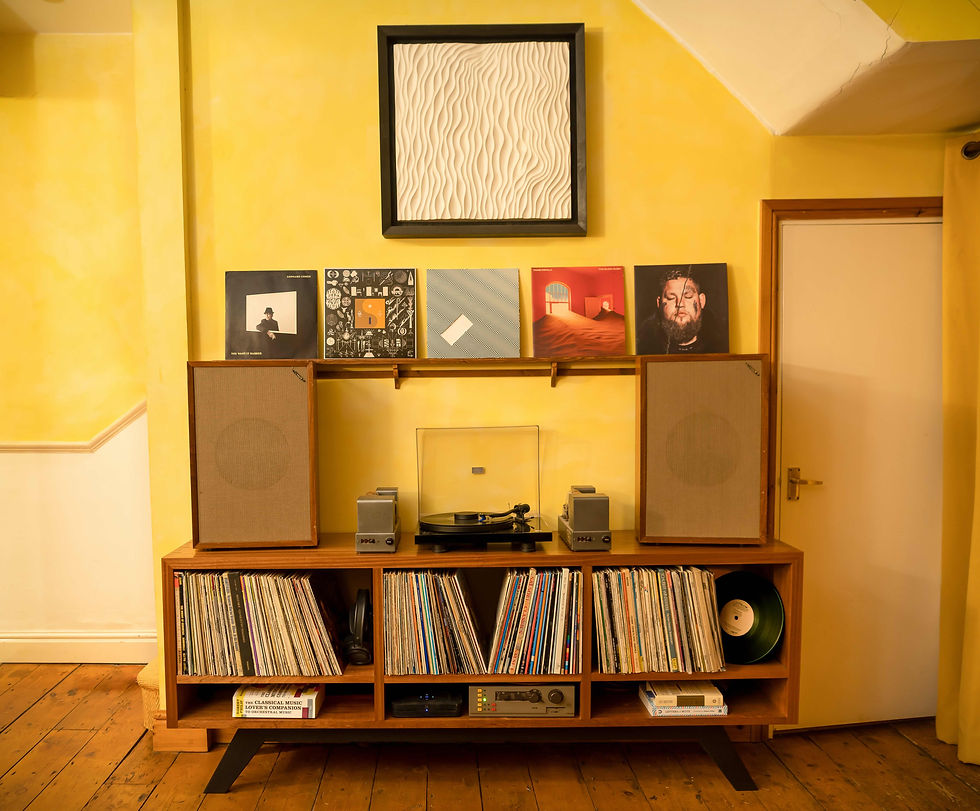
The valve amplifiers themselves generate a considerable amount of heat, so positioning them on top of the cabinet was not simply an aesthetic choice but also a practical one. Good airflow around audio equipment is essential, particularly with older valve systems, and keeping the amplifiers exposed allows heat to dissipate naturally while also turning them into part of the visual composition of the piece.
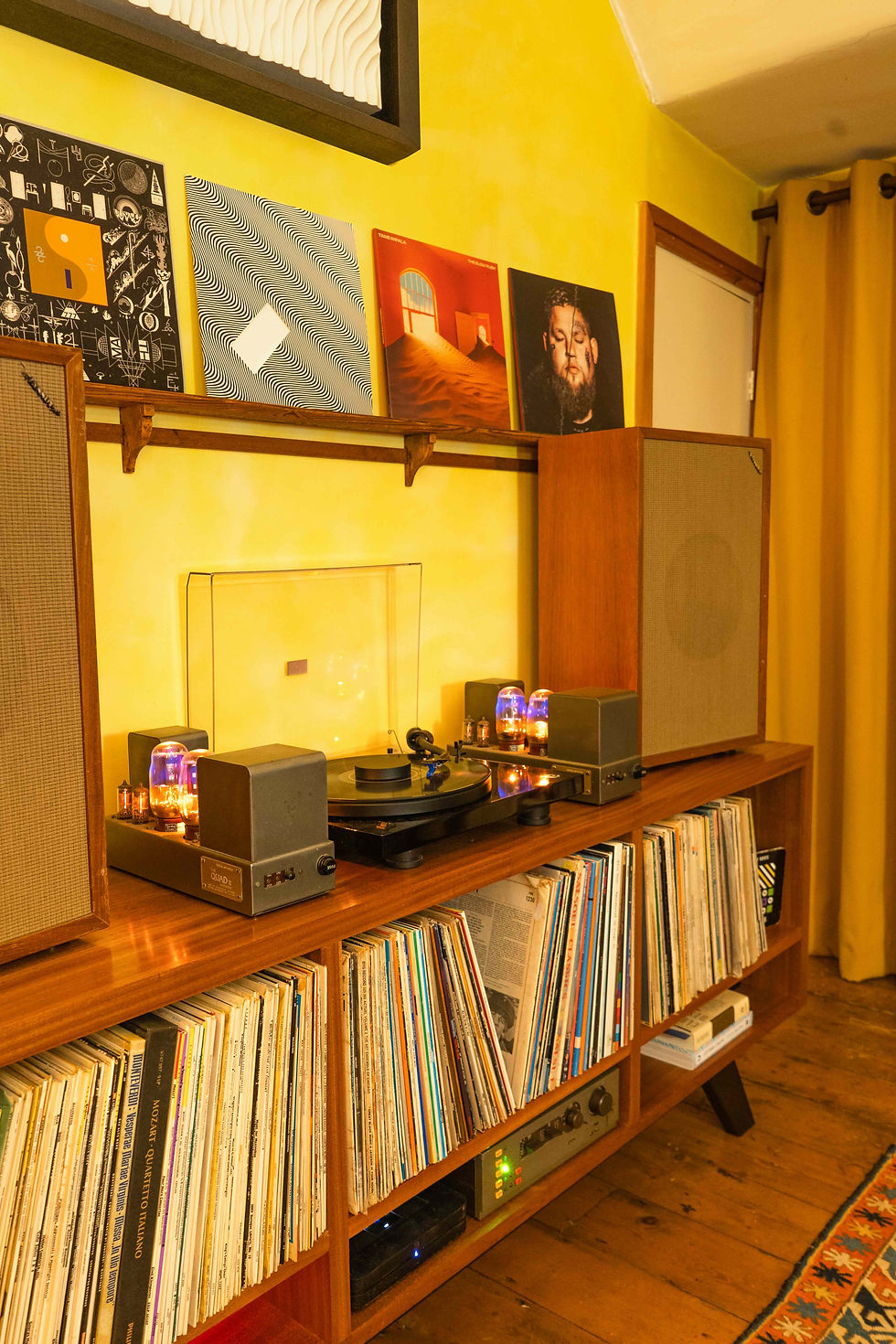
Because vinyl records are inherently rectangular objects, vinyl storage tends naturally towards rectilinear forms. A cabinet intended to store a large collection therefore has to embrace a certain degree of functional geometry. In this case, the cabinet measures 1.93m long and can store well over 300 LPs; roughly 180 records per linear metre depending on sleeve thickness. The challenge then becomes how to prevent such a large storage object from feeling visually heavy or overly utilitarian.
To do this, I accented the design with a series of small but important details: some decorative mitred dovetails (hard going in 40mm utile); angled legs in a contrasting timber; and carefully considered proportions intended to reduce the visual mass of the cabinet. These and the careful choice and treatment of the timber turn something that could be dull and functional into something much more elevated that is now front and centre of the home.

A Hidden Record Player Cabinet for a Family Home
The priorities behind this cabinet were almost entirely different. The client had young children and wanted the HiFi system protected when not in use, both practically and visually. Rather than celebrating the equipment openly, the aim here was for the cabinet to sit quietly within a traditionally furnished interior and reveal its function only when needed.
To achieve this, I designed a sliding tambour top made from grain-matched birdseye maple, also matching the cabinet panels. When closed, the tambour completely conceals the turntable beneath. When opened, it slides smoothly back into the cabinet itself, disappearing entirely and leaving the upper surface free for handling or displaying records. This approach allowed the cabinet to gracefully alternate between the two states.
The remaining stereo equipment sits behind closed doors held shut with magnetic catches, helping to protect the equipment from curious children. Unlike the previous cabinet, integrated vinyl storage was not required within the piece itself. Instead, I built a separate run of shelving within an alcove elsewhere in the room, functioning as both book storage and vinyl shelving.
The cabinet was also personalised to the home with the addition of some marquetry of a magpie on a branch of cherry blossom – the house is named after a Magpie from a story and being made from cherry it seemed fitting to put this on a branch of cherry blossom. The birdseye maple introduces subtle movement and texture through the figuring of the grain to resemble a background sky and clouds behind the magpie. The tambour front complements this and offers an elegant solution to the challenge of keeping the turntable hidden away and free from dust.

A Bespoke HiFi Cabinet with Integrated Turntables
This cabinet combined vinyl storage with integrated equipment housing, but approached the problem from yet another direction. The client wanted two turntables recessed flush into the top of the cabinet alongside a mixer, effectively creating something between a traditional HiFi cabinet and a DJ console.

The cabinet was built from solid walnut with rounded edges and curved corners intended to give the piece a softer, more sculptural quality. Unlike the more restrained cherry cabinet, this piece was designed to act as a focal point within the room and really showcase the audio equipment whilst being framed by the client’s beautiful Tannoy Arden speakers positioned either side of it.
To create a close visual relationship between cabinet and speakers, I used walnut throughout and even sourced the same finishing wax supplied by Tannoy for the speaker cabinets themselves. This allowed the sheen, colour, and overall character of the surfaces to sit together naturally within the room.
The recessed turntables and two tiers of vinyl shelving meant I had to pay careful attention the proportions and structure of the cabinet. Integrating turntables flush into the top also requires careful cable routing, ventilation, and service access. The cabinet also incorporated integrated LED lighting to softly backlight the vinyl collection and create a warmer atmosphere during evening listening sessions.
Where the first cabinet prioritised structural rigidity and large-scale vinyl storage, and the second prioritised concealment and domestic practicality, this cabinet leaned much more heavily into theatre and interaction.
What separates these cabinets?
They are all completely different! Despite all being bespoke HiFi cabinets, the three pieces solve entirely different problems. One displays the equipment openly; another conceals it almost completely. One integrates turntables directly into the furniture itself; another allows the turntable to sit independently on top. Two incorporate substantial vinyl storage, while one separates record storage from the main cabinet entirely.
The materials also change the character of each piece significantly. The utile cabinet feels cool, mid-century and slightly architectural. The cherry and birdseye maple cabinet is quieter and more restrained but personalised with the marquetry. The walnut cabinet feels softer, darker, and more luxurious.
These differences are precisely why bespoke furniture is valuable in this context. Audio systems vary enormously, but so do interiors, listening habits, and domestic requirements. A cabinet designed around a pair of vintage valve amplifiers will inevitably differ from one intended for a family sitting room or a DJ-inspired setup with integrated decks and mixers.
What do they have in common?
Although the cabinets differ substantially, they are linked by a common approach to design and construction. All three were built from solid timber and designed with longevity in mind. All prioritise rigidity, cable management, ease of use, and careful consideration of how audio equipment is used pracically within the furniture.
More importantly, all three emerged from designing around the client rather than forcing the client into a predetermined format. The dimensions, layout, materials, ventilation, storage requirements, and overall appearance were all developed specifically around the intended equipment, room, and way of living.
That flexibility is the real strength and beauty of bespoke HiFi furniture. Music tends to occupy a central role within the home, and the furniture surrounding becomes equally central which is why I love building it. A well-designed record player cabinet should not only store equipment effectively but also shape the experience of using it: making the system easier to live with, more enjoyable to interact with, and more naturally integrated into the space around it.

Comments